Background
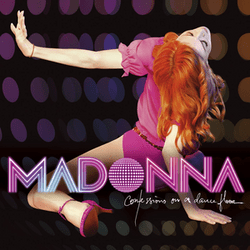
“Forbidden Love” is a track performed by Madonna from her tenth studio album, Confessions on a Dance Floor, which was released in November 2005. The song was written and produced by Madonna and Stuart Price, serving as an electronic ballad that explores a love existing in the shadows.
In this review of “Forbidden Love,” I examine how Madonna explores social and religious taboos surrounding love—a theme she has championed for decades. I also discuss how the song’s hypnotic electronic production creates a musical sanctuary for lovers who cannot be together in the real world. Finally, I highlight the missed opportunity of an official music video, especially given the powerful and visually stunning imagery used during her live tour performance.
Forbidden Romance in Music
The lyrical theme of Madonna’s “Forbidden Love” from Confessions on a Dance Floor centers on a relationship that is fundamentally restricted by external forces or societal boundaries. The world is not short of art that explores this topic. But I understand why it continues to be discussed – the restrictions and prohibitions continue to exist. The words emphasize a sense of secrecy and the high emotional stakes of a love that must be kept hidden, reflecting a shift away from the light-hearted pop of the album’s opening tracks.
I am not surprised that Madonna has explored this specific theme in her work. Madonna has frequently delved into the concept of prohibited or transgressive love throughout her career, often intertwining it with religious and social taboos. Her previous works, such as those on Bedtime Stories and Erotica, also delved into the complexities of desire that society deems inappropriate, showing that “Forbidden Love” is a modern continuation of her lifelong fascination with the tension between private truth and public judgment.
A Hypnotic Club Sanctuary
In my opinion, the music of “Forbidden Love” is underrated because it’s understated. It creates a very hypnotic atmosphere that feels like I a floating. It uses steady and soft electronic sounds that repeat over and over, drawing me into a dream-like state. Because the song doesn’t have sudden, loud changes, it feels very smooth and trance-like, making it easy to get lost in the rhythm. This calm but driving sound helps the listener feel the mystical and “magical” connection that Madonna sings about.
The dance floor is a special sanctuary where people can finally be themselves. In the real world, a forbidden love might be judged or stopped by society, but inside the music and the lights of a club, those rules seem to disappear. For a few minutes, the dancers can forget their troubles and experience a sense of freedom. That intentionality between the words and the rhythm is what I believe most people overlook. The song feels both sad and hopeful, as it celebrates a love that can only truly exist in the shadows of the night.
Visuals of a Secret Love
One of my life’s regrets was not seeing the Confessions Tour in person. But the visuals I found online made my FOMO only worse.
During the Confessions Tour, the live visuals for “Forbidden Love” were very powerful and artistic. Instead of a traditional dance, Madonna used performers doing street acrobatics and two male dancers who moved together in a way that suggested a deep, secret bond. The stage featured large screens showing religious and spiritual symbols, like the Star of David and the Islamic Crescent, bleeding into each other. This imagery showed that the forbidden part of the love wasn’t just about two people, but about how different worlds, cultures, or religions can struggle to come together. That message is timeless and is more relevant today than it ever was.
I feel that not having an official music video for this song was a huge missed opportunity. Madonna is a visual genius, and her music videos are often considered her strongest form of art because they tell stories that words alone cannot. A video for “Forbidden Love” would show the dream-like world she sings about or just about any concept that her enormous brain can fathom. The Confessions Tour gave us the hint. But the world wasn’t blessed to experience that visual masterpiece.
Conclusion
Madonna’s “Forbidden Love” serves as a powerful continuation of her lifelong work in challenging social and religious taboos. Along with Stuart Price, the music creates a necessary sanctuary for a love that society refuses to accept. And finally, the stunning imagery of her live performance confirms that she successfully translated these complex themes into a masterpiece of sound and sight.

