Background
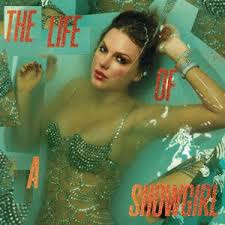
Released in October 2025 as her twelfth studio album, Taylor Swift’s The Life of a Showgirl serves as a high-glamour pop exploration of her persona during the record-breaking Eras Tour. Swift wrote and produced the record alongside long-time collaborators Max Martin and Shellback, marking a return to the polished sonic energy of her 1989 and Reputation eras.
In this album review of The Life of a Showgirl, I write about its maximalist pop production, the bold swings in the songwriting, and the narrative that shouldn’t come in the way of appreciating music.
Unapologetically Pop
After experimenting with the folk and indie sounds on three of her last four studio albums, Taylor Swift decided to return to high-energy pop music for The Life of a Showgirl. She reunited with famous producers Max Martin and Shellback, the team behind her biggest hits like “Shake It Off” and “Blank Space”. The choice shows she wanted to make music that feels powerful and polished, perfect for streaming playlists, power rotation on radio stations, and anthems for karaokes. She moved away from quiet acoustic songs and embraced a bright, professional sound that is designed to be a guilty pleasure for listeners. I was excited when I first heard the choice, thinking that working with these two producers would be a forever “what if”. But the fandom’s collective wishes prevailed, and we are fortunate that she came to her senses.
The production on this album is very maximalist – big, loud, and full of different sounds. For example, the lead single “The Fate of Ophelia” uses heavy drums and layers of electronic synths to create a dramatic, dance-pop atmosphere. The track “Actually Romantic” highlights the signature pop-rock energy that Max Martin was known for. Another highlight, “Opalite,” uses layered, shimmering harmonies to give the song a glittering quality. And getting inspiration from the likes of George Michael and the Jackson 5 demonstrates her understanding and appreciation of pop history.
However, the album also has quiet moments, and they are the ones where I have some doubts. Songs like “Eldest Daughter” and “Ruin the Friendship” have an understated treatment, with minimal instrumentation so that the listener can focus entirely on Taylor’s voice and the story she is telling. I think “Eldest Daughter” suffers because of the lyricism that I don’t relate to. It works for “Ruin the Friendship” but it sort of makes the song feel like it belongs on Speak Now.
Bold Swings in Songwriting
In this album, Taylor Swift takes bold swings by mixing classic art with modern internet slang. For example, in the song “The Fate of Ophelia,” she references a famous Shakespeare character but uses the modern phrase “keeping it 100” to describe her feelings. Similarly, the track “CANCELLED!” deals with the very current topic of cancel culture and public shaming. I think it works in some but comes off as awkward in others. But I admire the courage to go all out and experiment.
Despite these modern takes, the storytelling strengths that made Taylor famous are still the heart of the album. In “Ruin the Friendship,” she uses a clever lyrical twist to change the meaning of the song at the end. That was a gut punch I did not see coming. She also showcases her skill of world building in “Father Figure” and uses shimmering and colorful descriptions to help listeners visualize the story in “Opalite”. Finally, she still knows how to write deeply about the highs and lows of fame, in both “Elizabeth Taylor” and “The Life of a Showgirl”.
The Narrative Which Has Nothing to Do with the Music
When The Life of a Showgirl was first announced, many fans, including myself, were confused by the contrast between the visuals and the music. The bright, high-glamour imagery suggested an album purely about the sparkling lights of the stage, but the songs often revealed a messy life behind the scenes. In my humble opinion, this confusion doesn’t really matter. Whether the music matches the outfit or not, the album successfully captures a specific moment in her career where she was living under a massive spotlight.
Despite the initial mix-up, the album is actually very cohesive because it reflects exactly what Taylor was feeling while writing it. I can make a similar observation with her album Midnights – because a title like “Midnights” or “The Life of a Showgirl” is quite general, I can fit almost any song or style into that theme. What is truly important is that the record represents the musical styles she was enjoying at the time and the unique life she led during the Eras Tour. It doesn’t need a perfect visual match to work. It just needs to be an honest snapshot of her world and the pop-heavy sounds she wanted to create.
Conclusion
The critics and fans have shared their views. But I personally think that The Life of a Showgirl is a testament to Taylor Swift’s courage.
She chose to be unapologetically pop. She and her collaborators didn’t hold back on the production. The songwriting took massive swings. Some missed. But they are still built on her key strengths.
The narrative has gone in so many different directions. A lot of think pieces have focused on everything else but the music. But when I silence the noise and zoom in on the songwriting and production, the outcome is still above average.
 One Man Anthem