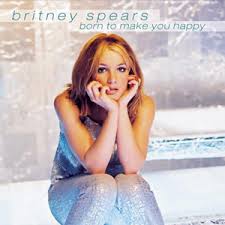
Background
Released in December 1999 by Britney Spears, “Born to Make You Happy” served as the fourth international single from her debut album, …Baby One More Time. The track was written by Andreas Carlsson and Kristian Lundin, with production handled by Lundin. I don’t note the full credits when I write articles but it’s worth calling out that Max Martin handled the mixing on this one.
In this song review of “Born to Make You Happy”, I write about the choices that shaped the track’s reception – Britney Spears’s clear vision of what she wants to sing about, the release strategy for the single, and the choreography that was ahead of its time.
Britney as the Writing Boss
The songwriting for “Born to Make You Happy” captures a very pure and innocent kind of heartbreak. The lyrics focus on the simple, intense feelings of a young person who is sad about a breakup and wants to make things right. Even though I wasn’t as mature or as popular as Britney back in 1999, I could relate to this phase of her discography. It’s sweet and relatable, not dark or mature.
I did not know this before. But the song was originally intended to be much more sexual. Britney herself stepped in and asked for a rewrite because she wanted the song to be more age-appropriate and focused on the story of a lost love.
Some may argue that’s pandering (especially considering how she would release “I’m a Slave 4 U” years later). But I see it as a woman in control of the image she wants to portray and the art she wants to release. Many discredit Britney for her lack of writing credits in her earlier music. But make no mistake, she always had a point of view and she made sure that’s executed.
Released Globally, but Only in an Alternate Universe
I was born in the Philippines and I consumed MTV Asia heavily. Only when I grew older did I realise that record labels used to release different songs in different parts of the world to match local tastes and trends. For Britney Spears, her label, Jive Records, decided that European and Asian listeners were more ready for the upbeat “Born to Make You Happy,” while American listeners were given the slower ballad “From the Bottom of My Broken Heart”.
I thought that was a mistake based on my initial reaction to “Born to Make You Happy”. I liked what I heard and I thought that should have been the single in all markets. Commercially, I think the decision to release “From the Bottom of My Broken Heart” was seen as a big mistake for the United States because “Born to Make You Happy” was a massive success internationally, especially in the United Kingdom. It reached #1 on the UK Singles Chart.
I haven’t seen the parallel universes. But I think more fans of Britney around the world would have been more satisfied if “Born to Make You Happy” was released globally. After all, the track plays a more integral part in Britney Spears’s discography than “From the Bottom of My Broken Heart”.
Choreography That is Ahead of Its Time
In the music video for “Born to Make You Happy”, Britney Spears performs high-energy, sharp choreography even though the song is a slower ballad. I can’t dance but I thought that was admirable and charming.
The choice feels very young. It turns every emotion into a physical spectacle. However, I do think older generations might find this cringe or awkward. Dancing intensely to a slow song about heartbreak can look over-the-top or mismatched, as if the artist is trying too hard to catch attention instead of just letting the music be quiet and serious.
Despite those criticisms, nostalgia has turned this specific creative choice into something truly iconic. For fans who grew up in the late 90s, the image of Britney doing precise, rhythmic movements during the bridge is a core memory of the Y2K era. I don’t think people gave the video credit for what it was at the time – unique and bold. Doing something “cringe” is exactly what makes a pop moment unforgettable.
Conclusion
Bold – that is not a term I would associate with Britney Spears’s Born to Make You Happy. But the decisions taken regarding the songwriting, the choreography, and the release strategy prove how calculation and intentionality are pre-requisites to becoming a global superstar.
 One Man Anthem