Background
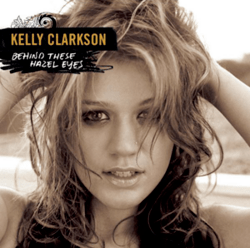
“Behind These Hazel Eyes” was released in April 2005 as the third single from Kelly Clarkson’s second studio album, Breakaway. This track was written by Clarkson, Max Martin and Dr. Luke, while Martin and Dr. Luke produced it.
This song review of “Behind These Hazel Eyes” focuses on how the track validated Kelly Clarkson as a songwriter, how she cemented her place in pop-rock, and the resurrection of breakup anthems.
Here I am, Once Again
Not to sound like an ageing writer, but back in the day, being involved behind the creative process wasn’t necessary for a musician to gain popularity, nor was it a quality that was a dealbreaker for fans. But times have changed. Luckily, Kelly offered more than just her voice.
“Behind These Hazel Eyes” served as a turning point that proved she was a capable songwriter, and not just a reality TV star. The song’s creation began as an olive branch from Martin and Dr. Luke, following a miscommunication during the making of “Since U Been Gone”. On “Since U Been Gone”, Clarkson had written lyrics, but the producers had already finished the song with their own version, leaving Clarkson feeling like a fool. To make amends, the two producers sent her a rough, wordless demo of “Behind These Hazel Eyes”, specifically so she could lead the songwriting process from the very beginning. I already adore Max Martin. But hearing this story make me like him even more.
Because Kelly was on tour at the time, she collaborated with the producers via email, sending back lyrics that tweaked the song to reflect her supposed breakup with David Hodges. The duo of Martin and Dr. Luke handled the instrumental backdrop, while Clarkson was responsible for the narrative. All three writers eventually met in person to finalize the song’s bridge together. Kelly previously struggled to get her label to validate her as a writer. And I’m happy she got her way. In the end, her guts were right.
Can’t Deny It, Can’t Pretend
Pop princesses are aspirational. Fitting into a mould is ideal. But we all have angst and unresolved anger that prevent us from relating to a fairytale. And that’s where people like me, individuals who want to defy some expectations but not rebel altogether, need pop-rock.
“Behind These Hazel Eyes” proved Kelly could consistently deliver high-energy hits that were much darker and heavier than the American Idol ballads she performed. Her foray into pop-rock ranged from the fun, upbeat anthem about being happy after a breakup (“Since U Been Gone), to a more mature and painful side of her life (“Behind These Hazel Eyes”). I wouldn’t have minded another balladeer. But Clarkson clearly had rage and the range.
The verses are a bit more electronic and rhythmic, which is the pop side that makes me want to focus and listen. When the chorus hits, the sound changes completely – the drums become much louder, and the electric guitars sound distorted and heavy. The song is powerful enough for a rock concert, but still polished enough to be played constantly on pop radio stations (or to retire in TRL). As a fan reminiscing the Breakway era, she was everywhere at the time – unstoppable onstage and playing in any form of media I tune into.
Broken Up, Deep Inside
Following the massive success of “Since U Been Gone”, “Behind These Hazel Eyes” solidified the breakup anthem as a dominant trend. She released two different types of breakup songs in a row. She showed that they didn’t have to be a slow, sad ballad. It could be a loud, aggressive rock song that helped listeners scream out their frustrations. And both have been staples in not just singing competitions (for contestants to show they have Kelly’s range), but also in karaokes (for the general public to show they have Kelly’s rage).
I always wonder why Taylor Swift faces so much vitriol. Unlike Swift, Clarkson’s breakup songs were not targeted negatively. This was partly because the media at the time focused more on Clarkson’s vocal talent and her “girl-next-door” image rather than her private dating life. Clarkson’s lyrics were also more universal. She didn’t include clues or Easter eggs that pointed to a specific person. Because the songs felt like they could be about anyone’s breakup, the public saw Clarkson as a relatable voice for everyone’s pain rather than a serial dater.
To be clear, I stan both (Swift even more). I see the pros and cons of being general or specific in songwriting. I just find the polarisation for one but not both strange. Though to be honest, I think neither should receive any hate.
Conclusion
“Behind These Hazel Eyes” by Kelly Clarkson proves that she has not only the rage, but also the range. And when I speak of range, I refer not just to her vocal abilities, but also the roles and genres she pursues.
 One Man Anthem