Background
Taylor Swift is a cut above the rest. She turns glass into gemstones. She makes her own happiness. And with “Opalite”, she contributed to ours.
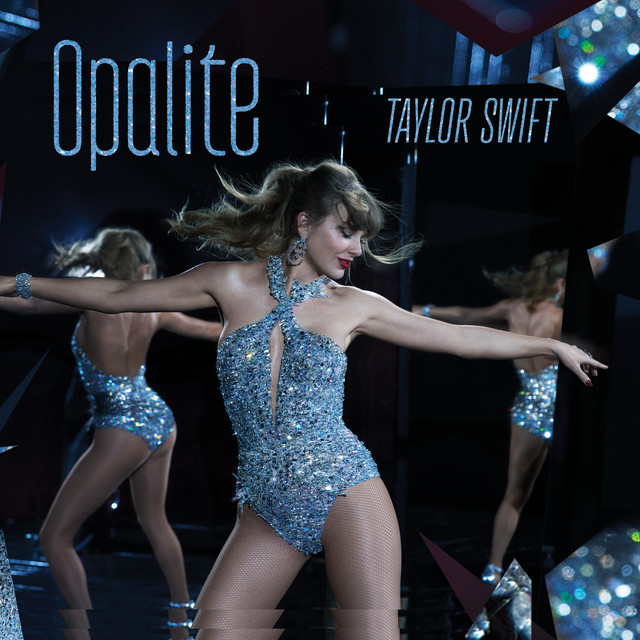
“Opalite” is the third track and second single from Taylor Swift’s twelfth studio album, The Life of a Showgirl (2025). The song was officially released on January 2026, and it was written and produced by Swift, Max Martin and Shellback.
On my first listen to the album, “Opalite” stood out, and it became an instant favourite. Four months since, I still consider the song the best from The Life of a Showgirl.
You Had to Make Your Own Sunshine
If there’s a woman who knows how to work hard, it has to be Taylor Swift. I am impressed and inspired by her dedication to her craft – from the amount of albums she releases, the numerous stadiums and arenas she performs in, and the marketing and sales tactics she thinks of and deploys. I guess the same work ethics applies to her romantic life, and that’s why she’s bearing the fruits of her labour.
I’ve never heard the word “opalite” used in a song. The gemstones pop music often use and glamourise are naturally occurring, rare and/or extremely valuable (think diamonds or gold). But after her fair share of romantic affairs, she knows better than to rely on fate and luck. Happiness is a project she deliberately undertakes and intentionally actions on.
Unlike a diamond, opalite is glass made by humans to look like a gemstone. It’s synthetic and it can be manufactured. She’s aware that happiness is a skill, and she must hone this ability. And her disposition and relationship now is a result of hard work, discipline, and her choice to be happy.
An opalite’s value might not be inherent. But it’s definitely earned.
But Now, the Sky is Opalite
It was winter in Europe when I discovered “Opalite”. And I live in the Netherlands where the days were short, the sky appeared to be onyx, and I needed to power through the lack of sunshine.
At the same time, Yuletide season was approaching. The Christmas markets were open, gift giving was everywhere, and the mood was festive. I thought “Opalite” was the best song to motivate me to get out of bed, and see the light behind the darkness.
In the chorus, the notes go higher and higher as the song progresses. She’s stacking her voice multiple times to create a choir of Swifts, making any listener want to participate in the “Oh-oh-oh”. If I didn’t listen to the lyrics properly, I’d figure she was making a holiday single.
The tempo is fast and the melody is full of energy. The beat is bouncy, and the speed makes anyone want to tap their feet. Using an omnichord (a term I learned today), the producers added sounds in the chrous that twinkle, almost like bells or stars. The guitar wasn’t loud or angry, but rather crisp and clear.
I don’t think she can give Mariah Carey’s “All I Want for Christmas is You” a run for its money. But Taylor can try and this is her best bet.
Life is a Song, It Ends When It Ends
Video killed the radio star. MTV has now stopped playing music videos. But Taylor Swift hasn’t given up on the artform.
Instead of standard digital video, Swift shot “Opalite” on 35mm film. She also took the opportunity to disrupt the traditional rollout for music videos by releasing on Spotify and Apple Music first. She was trying to not only enhance the experience, but also innovate.
She didn’t hold back on collaborations. She worked with Academy Award-nominated cinematographer Rodrigo Priet. She enlisted all the celebrities who appeared with her on a 2025 episode of The Graham Norton Show. It was a chance encounter, an idea born out of a joke. But she seized that opportunity.
She took some left field creative choices. Instead of glitz and glamour that people like me associated with the song, she went with throwback and nostalgia. I’m not completely onboard but I respect her having a point of view. She gave me images I’d never thought I’d see again -90s informercials, MTV, or having a rock or a cactus as a friend.
“Opalite” already had its success. It didn’t need a video. And if it did, she didn’t have to invest resources and take risks. But she did both.
Conclusion
“Opalite” proves that there are many things I can count on Taylor to deliver. She works hard in a lot of aspects of her life, and that is inspiring. She has a song for every mood I’m in, even for extreme glee and celebration. And she’s willing to invest, innovate, and take risks with the art she makes.
 One Man Anthem